Best Scuba Wetsuit in 2026
The Cressi Fast 5mm at $289.95 is the best wetsuit for most divers, because 5 mm covers the 66 to 72 F band where most temperate diving happens and its ultraspan neoprene stretches enough to put on without a fight. Match thickness to water temperature: 3 mm for 73 to 79 F, 5 mm for 66 to 72 F, 7 mm plus hood for 59 to 65 F.
A wetsuit does not keep water out. It lets a thin film in, traps it against your skin, and lets your body heat it, which is why fit matters more than thickness: a loose 7 mm suit that flushes cold water through the lower back will beat you up worse than a well fitted 5 mm. For most divers the answer is the Cressi Fast 5mm at $289.95, because 5 mm covers the temperature band where the majority of temperate diving actually happens.
A wetsuit is a closed cell neoprene foam garment that insulates in two ways at once: the gas bubbles in the foam resist heat conduction, and the tight fit stops the warmed layer of water against your skin from being replaced by cold water. Both mechanisms fail the same way, through flushing, which is why every design feature on an expensive suit is aimed at sealing wrists, ankles, neck and zip rather than at adding material.
Best scuba wetsuits by experience level

Cressi Morea 3mm Wetsuit
A one piece 3 mm with reinforced knees at a price that makes owning your own suit obviously better than renting. Warm water only.
Best for: Caribbean, Red Sea and other 78 F and warmer diving

O'Neill Reactor-2 3/2mm Back Zip Full Wetsuit
A surf cut 3/2 that many divers use for warm water because the stretch panels make it easy to get into. Thinner in the arms than a dedicated dive suit, so slightly cooler.
Best for: Warm water diving plus surface watersports

Cressi Fast 5mm Wetsuit
A 5 mm one piece with an ultraspan neoprene that stretches enough to put on without a fight. The workhorse thickness for most temperate diving.
Best for: Mediterranean, Pacific Northwest summer, and quarry diving

Henderson 3mm Thermoprene Pro Men's Back Zip Jumpsuit
Thermoprene Pro stretches far more than standard neoprene, which is the difference between a suit you wear and a suit you avoid. Made in the USA and cut for diving rather than surfing.
Best for: Divers who want one very comfortable warm to temperate suit
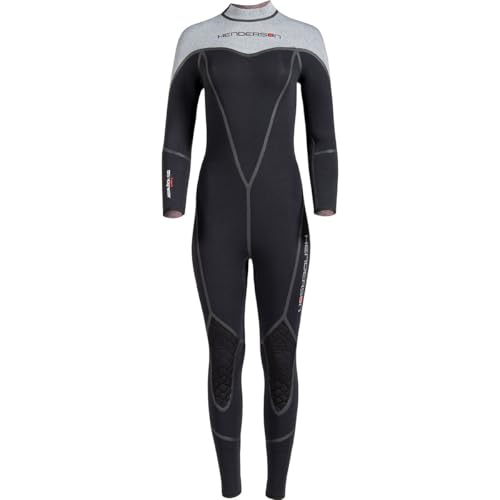
Henderson 5mm Aqua Lock Women's Fullsuit
A 5 mm with wrist and ankle seals designed to cut flushing, which is where most of the heat actually goes. Cut specifically for women rather than scaled down from a men’s pattern.
Best for: Temperate water diving where flushing is the problem
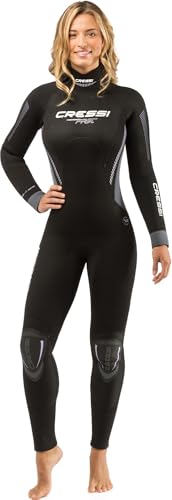
Cressi Fast Lady 7mm Wetsuit
A 7 mm one piece for cold temperate diving, with the same stretchy ultraspan panels as the 5 mm. Pair it with a hood, because an unhooded head is most of the heat loss.
Best for: Cold temperate diving in a full suit rather than a drysuit

Scubapro Everflex Yulex 3/2mm Wetsuit
Plant based Yulex foam instead of petrochemical neoprene, with a vertical back zip and a fleece lining. You are paying a premium for the material choice.
Best for: Divers who want to move away from petroleum neoprene
Skip it if: Divers buying on warmth per dollar, because the premium here is paid for the material choice

XCEL Polar Hydroflex 8/7/6/5mm Scuba Fullsuit
A graduated thickness suit, thickest over the core and thinner at the limbs, aimed at genuinely cold water without going to a drysuit. Very restrictive by comparison with a 5 mm.
Best for: Cold water divers who cannot justify a drysuit yet
Skip it if: Anyone diving above roughly 60 F, where it is far more suit than the water asks for

Bare 5mm Reactive Wetsuit
Full stretch neoprene with a Graphene Omnired lining that Bare positions as its warmest wetsuit. Expensive, and genuinely warmer than a standard 5 mm.
Best for: Long cold dives where a drysuit is still too much suit
Skip it if: Warm water divers, who will pay for a thermal lining that the water never tests
Specifications are the manufacturer's published figures, compared against verified owner reviews. Prices and stock change constantly, so confirm on the retailer page. Cards without a single listing link to a scoped search because that model is sold through dive shops. As an Amazon Associate we earn from qualifying purchases.
What wetsuit thickness do you need for your water temperature?
Match the suit to water temperature, not air temperature. A 90 F day over 62 F water is a 7 mm dive, and every diver who has shivered through a second dive in a borrowed shorty has learned this the expensive way.
| Water temperature | Celsius | Typical choice | Starting lead, percent of body weight |
|---|---|---|---|
| 85 F and warmer | 29 C and up | Rash guard or dive skin | 0 to 2 lb |
| 80 to 85 F | 27 to 29 C | 2 mm shorty or 3 mm full | About 5 |
| 73 to 79 F | 23 to 26 C | 3 mm full | 5 to 7 |
| 66 to 72 F | 19 to 22 C | 5 mm full | 8 to 10 |
| 59 to 65 F | 15 to 18 C | 7 mm full plus hood and gloves | About 10 |
| 50 to 58 F | 10 to 14 C | 7 mm semi dry or a drysuit | About 10 |
| Below 50 F | Below 10 C | Drysuit, with the training that goes with it | 10 plus 4 to 8 lb |
Three things push you one step warmer than the chart: repetitive dives, long dives, and current. Cold is cumulative across a day, and the third dive always feels colder than the first at the same temperature. A thin body composition and a slow swimming style push the same direction. Run your own numbers through the wetsuit thickness calculator and keep the wetsuit thickness chart for the boat.
How should a scuba wetsuit fit?
Tight, everywhere, with no folds. The specific places to check are the lower back, which is where a suit that is too long in the torso pools water; behind the knees, where a bagged fold flushes on every kick; the armpits; and the seals at wrist, ankle and neck. If you can pinch a large fold of neoprene anywhere, the suit is too big.
It should be hard work to get into dry and comfortable once wet. A suit that goes on easily in a shop is a suit that will flush in the water. That said, there is a real difference between a tight suit and a suit that restricts your shoulders: if you cannot reach your own tank valve or your low pressure inflator, the suit is wrong regardless of how well it seals.
Stretch is what makes a well fitting suit tolerable, and it is most of what the price step buys in the middle of this table. The Henderson Thermoprene Pro at $346.99 is a 3 mm that stretches dramatically more than standard neoprene, which turns a fifteen minute wrestling match into a thirty second one, and a suit you dread into a suit you wear. That is not a trivial benefit: the best wetsuit is the one you actually put on for the second dive.
Women should look specifically for suits cut on a female pattern rather than scaled down from a men's block, because torso length and hip to waist ratio are where scaled patterns fail. The Henderson 5mm Aqua Lock at $299 and the Cressi Fast Lady 7mm at $349.95 are both cut that way.
How does a wetsuit change your weighting?
Substantially, and in two directions at once. Neoprene is buoyant at the surface, so a thicker suit needs more lead. Neoprene also compresses with depth, so that buoyancy shrinks as you descend, which is why you add gas to the BCD going down and dump it coming up.
Starting points as a percentage of body weight: 0 to 2 lb for a swimsuit or skin, about 5 percent for a 3 mm shorty, 5 to 7 percent for a 3 mm full suit, 8 to 10 percent for a 5 mm full, about 10 percent for a 7 mm full with hood, and 10 percent plus another 4 to 8 lb for a drysuit with an undergarment. Salt water needs more lead than fresh, by roughly 2.5 percent of total immersed weight.
Worked, for a 180 lb diver: a 3 mm full suit starts at 9 to 13 lb of lead, a 5 mm at 14 to 18 lb, and a 7 mm with hood at about 18 lb. Stepping from a 3 mm to a 5 mm therefore costs roughly 1 lb of extra lead at the low end, which is lead your BCD has to be able to carry in its integrated pockets and lead you have to offset with gas in the bladder at the surface.
The weight check happens at the end of the dive, not the start. An aluminium 80 goes about 4 lb positive as it empties, so a diver weighted perfectly with a full cylinder will be fighting to hold a safety stop at the end. Empty the BCD completely, hold a normal breath, float at eye level, and sink slowly on the exhale. Confirm the numbers with the weighting and buoyancy calculator before the trip, then prove them in the water.
A 3 mm neoprene hood at $19.99 is the single most efficient piece of exposure protection per dollar, because an uncovered head is a large share of total heat loss. It also adds buoyancy, so re-check your weighting the first time you dive with one.
What is the difference between a wetsuit, a semi dry and a drysuit?
A wetsuit lets water in and heats it. A semi dry is a thick wetsuit engineered to minimise the exchange of that water, with sealing cuffs at wrist, ankle and neck and a watertight zip. It is still wet inside and still depends on your body as the heat source. A drysuit keeps water out entirely with latex or silicone seals and a dry zip, and insulates with an undergarment plus the layer of gas you add to it.
The step to a drysuit is not a purchase, it is a certification. A drysuit becomes a second buoyancy device the moment you put gas in it, and a runaway ascent driven by gas trapped in the feet of a suit is one of the classic drysuit accidents. The Bare Aqua Trek Tech Dry at $1,679.95 is a trilaminate shell of the kind most cold water recreational divers end up in, and $1,390.00 over a 5 mm wetsuit is the smaller half of the total cost once undergarments and training are counted. The wetsuit versus drysuit comparison works through where the crossover actually sits.
Between the two, a Sharkskin Chillproof layer at $159.99 is worth knowing about. It works as a wetsuit base layer, as a drysuit undergarment, and as the warmest thing you can put on during a surface interval, which is where a surprising amount of a cold day is actually lost.
What do expensive wetsuits do differently?
Seams. A flatlock stitched seam is cheap, flexible and full of needle holes that let water through. A glued and blind stitched seam, where the panels are glued and then stitched only partway through the neoprene, does not perforate the material. Every warm suit uses the latter, and liquid tape over the seam is the next step up.
Linings. Thermal linings, including the graphene lining in the Bare 5mm Reactive at $614.95, reflect body heat back rather than adding thickness. The claim is that they make a 5 mm perform closer to a 7 mm without the stiffness or the extra lead, and owner reports broadly support a real difference in long cold dives.
Graduated thickness. The XCEL Polar Hydroflex at $559.95 puts 8 mm over the core and thins toward the limbs, which is where the heat actually leaves and where mobility actually matters. It is a genuinely cold water suit and it is genuinely restrictive compared with a 5 mm.
Materials. The Scubapro Everflex Yulex at $459 replaces petrochemical neoprene with plant based foam. It performs comparably to a good conventional 3/2, and the premium is paid for the material choice rather than for warmth. That is a legitimate reason to buy it and it should be an informed one.
How do you get into a tight wetsuit without destroying it?
Slowly, and from the bottom. Neoprene tears at the fingernail, not at the seam, so the technique is to work small amounts of material up the leg with flat fingers and palms rather than grabbing handfuls and hauling.
Get the legs to the knee first, then to the crotch, then do the same with the arms to the elbow before you commit the shoulders. A plastic bag over each foot and each hand lets the limb slide through the tight cuff without dragging on skin, which is the single most useful trick in diving and costs nothing. Wetting the suit first helps on a warm suit and makes a cold one considerably worse to stand around in.
Never pull on the zip to close a gap. If the zip will not meet, the shoulders are not fully seated, and forcing it is how a slider gets ripped off tape. Have someone hold the base of the zip while you pull the lanyard straight up rather than at an angle.
Coming out, reverse the order and go slowly through the wrist and ankle seals. The cuffs are where almost all wetsuit damage happens, because that is where an impatient diver at the end of a cold day applies the most force to the thinnest material.
Who should not buy the expert tier?
Skip the Bare Reactive at $614.95 if you dive Caribbean or Red Sea water. Its thermal lining is aimed at long dives in genuinely cold conditions, and in 80 F water it is simply an expensive 5 mm you will overheat in on the boat. $325.00 over the Cressi Fast is money that belongs in a dive computer instead.
Skip the XCEL Polar Hydroflex at $559.95 unless you dive below roughly 60 F regularly. It is restrictive, heavy and takes forever to dry, all of which are the correct trade for the water it is built for and the wrong trade for anything warmer. $270.00 over a 5 mm buys cold water capability, not comfort.
Skip the Everflex Yulex at $459 if warmth per dollar is your criterion. $169.05 over the Cressi Fast buys a plant based material and a 3/2 rather than a 5 mm, which is a thinner suit for more money. Buy it because you want the material, not because you expect it to be warmer.
A newly certified diver diving warm water should buy the Cressi Morea 3mm at $154.95 or the O'Neill Reactor-2 at $151.80, put the rest into gear that changes every dive, and revisit exposure protection when they know what water they actually dive. The wetsuit buying guide covers the sizing process in detail.
Buying tips
- Buy for the coldest water you dive regularly, not the warmest. You can always vent a suit that is slightly warm; you cannot add neoprene at 60 feet.
- Check the size chart against your measurements, not your clothing size. Torso length is the dimension that most often decides the fit.
- Add a hood before you add thickness. It is the cheapest warmth per dollar in diving and it is easy to remove.
- Re-check weighting after any exposure change. A new suit, a new hood or fresh water instead of salt all move the number.
- Rinse inside and out, hang wide, keep it out of the sun. Ultraviolet and creases are what kill neoprene, not diving.
- Do not buy a drysuit before the course. A drysuit is a second buoyancy device and it needs its own training.
Deciding on a specific model? We review the Henderson 3mm Thermoprene Pro back zip jumpsuit review and Cressi Fast 5mm wetsuit review in full.
Frequently asked questions
What thickness wetsuit do I need?
Match thickness to water temperature, not air temperature. Above 85 F a dive skin is enough. From 80 to 85 F use a 2 mm shorty or a 3 mm full suit, from 73 to 79 F a 3 mm full, from 66 to 72 F a 5 mm full, and from 59 to 65 F a 7 mm full with hood and gloves. Below 59 F you want a 7 mm semi dry or a drysuit. Long dives, repetitive dives and current all push you one step warmer.
How should a scuba wetsuit fit?
Tight everywhere, with no loose folds at the lower back, behind the knees or in the armpits, and no gaps at the wrists, ankles or neck. A wetsuit works by trapping a thin film of water that your body heats, so any pocket that lets fresh cold water flush through is a hole in the system. It should be hard to put on dry and comfortable once wet. If you can pinch a large fold of neoprene anywhere, size down.
How much extra lead does a wetsuit need?
A rough starting point is a percentage of body weight: 5 to 7 percent for a 3 mm full suit, 8 to 10 percent for a 5 mm, and about 10 percent for a 7 mm with a hood. Salt water needs more lead than fresh. These are starting points only. The real figure comes from a weight check done at the end of a dive with a nearly empty cylinder, floating at eye level with an empty BCD and sinking slowly on the exhale.
Does a wetsuit get colder as I go deeper?
Yes. Neoprene is foam full of gas bubbles, and those bubbles compress with depth, so a 7 mm suit at 100 feet is measurably thinner and less insulating than the same suit at the surface. It also loses buoyancy as it compresses, which is why your BCD needs air added on descent. This is one reason cold deep dives feel far colder than the surface temperature suggests they should.
What is the difference between a wetsuit and a semi dry?
A semi dry is a thick wetsuit with sealing systems at the wrists, ankles and neck plus a watertight zip, designed to nearly eliminate flushing. It still lets a small amount of water in and still relies on your body to heat it, so it is not a drysuit. It is the sensible step between a 7 mm wetsuit and a drysuit for divers in roughly 50 to 58 F water who do not want the training a drysuit requires.
How do I make a wetsuit last?
Rinse it in fresh water inside and out after every day of diving, never leave it in the sun, and hang it on a wide shouldered hanger rather than folding it over a rail, because a crease in neoprene eventually becomes a permanent thin spot. Wash it occasionally with a wetsuit specific cleaner to kill the bacteria that cause the smell. Zip the zip closed for storage so the slider does not distort the tape.
How we choose: we compare published manufacturer specifications, published training agency standards, and verified owner reviews across retailers. We do not test gear in person, and every depth rating, cylinder capacity and algorithm name quoted here is the manufacturer's published figure unless we say otherwise, so confirm it on the current spec sheet before you buy. Nothing here is dive instruction, and no calculator output on this site is a dive plan. Scuba diving carries a real risk of decompression sickness, oxygen toxicity, barotrauma and drowning. Dive within the limits of your certification, verify every plan with your own computer, and buy the training before the gear that assumes it.
Logging your own SAC rate and gas plans? The Dive Kit & Air Planning Workbook is the paid version of these pages: 8 printable worksheets you fill in with your own numbers, plus the full PDF, $29.