Best Scuba Regulator in 2026
The Cressi MC9-SC with Compact Pro second stage at under $1,000 is the best scuba regulator for most divers: a sealed balanced diaphragm first stage, an octopus in the box, and consistent breathing effort as cylinder pressure falls. The Oceanic Alpha 8 SP5 at under $500 is the warm water starter and the Scubapro MK17 EVO 2 at under $1,000 is the cold water pick.
A regulator is the piece of equipment that stands between you and the fact that humans cannot breathe underwater. It reduces cylinder pressure of up to 3,442 psi down to something your lungs can move, in two stages, on demand, in cold water, while you are upside down. For most divers the answer is the Cressi MC9-SC with the Compact Pro second stage at under $1,000, because a sealed balanced diaphragm first stage is the one genuine performance step in this category and this is the cheapest honest version of it.
A scuba regulator is a two stage pressure reducer. The first stage attaches to the cylinder valve and drops tank pressure to an intermediate pressure of roughly 130 to 145 psi above ambient. The second stage, the part in your mouth, drops that to exactly ambient pressure the moment you inhale. Everything else on this page is a variation on how well those two things are done and how long they keep being done.
Best scuba regulators by experience level

Oceanic Alpha 8 SP5 Yoke Regulator
A long running unbalanced piston set with a pneumatically balanced second stage option. Parts availability across North America is its real advantage.
Best for: North American divers who want easy parts and service

Cressi AC2/XS2 Regulator and XS2 Octopus Package
An unbalanced piston first stage with a downstream second, sold as a set with a matching octopus. Simple, cheap to service, and entirely adequate for warm water recreational depths.
Best for: A first regulator for warm water diving
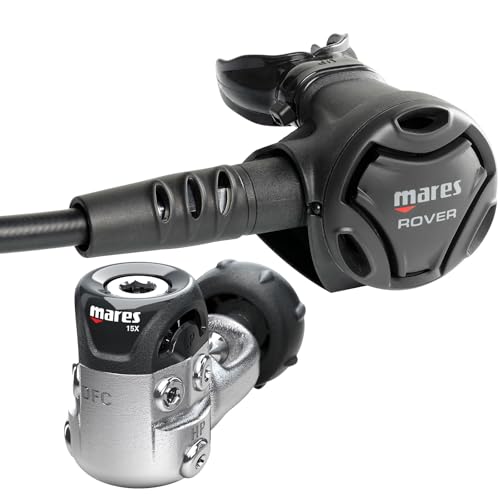
Mares Rover 15X Regulator Set
A piston first stage and a compact second stage, both built to be serviced by any Mares dealer worldwide. The set that a lot of resort fleets run.
Best for: Travel diving where local service matters more than performance
Skip it if: Cold water below about 50 F, where a sealed first stage is the safer choice

Sherwood Scuba Brut Pro Regulator
The dry bleed first stage design that resort and training fleets buy because it tolerates neglect. Not the smoothest breather here, but the hardest to kill.
Best for: Rental style abuse, boat diving, and cold rinse-and-forget use
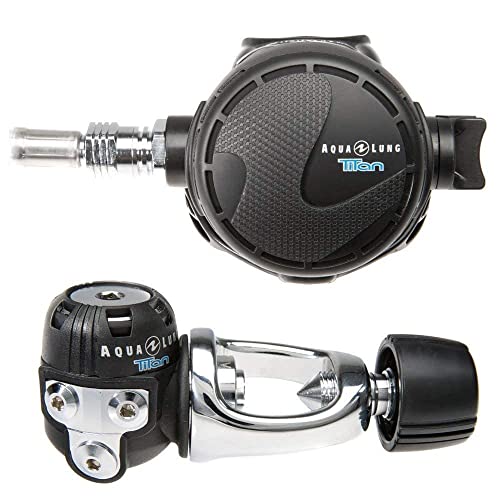
Aqua Lung Titan Regulator (Yoke)
A balanced piston first stage with an adjustable second, and one of the widest dealer networks in diving. The service network is a genuine feature, not filler.
Best for: Divers who want a balanced first stage and service anywhere
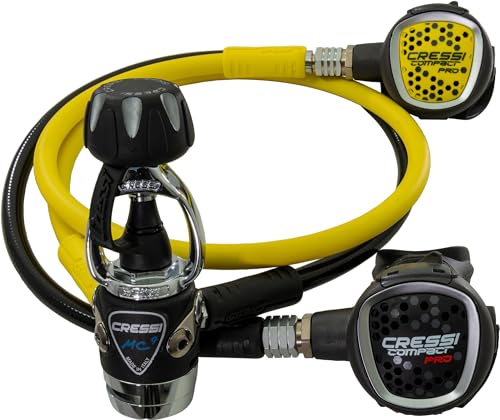
Cressi MC9-SC/Compact Pro Regulator Set with Octopus
A sealed balanced diaphragm first stage, which is the meaningful upgrade over the AC2: consistent breathing as tank pressure falls, and sealed internals for cold or silty water.
Best for: Divers stepping into cold water or deeper recreational depths

Atomic Aquatics Z3 Regulator
A sealed environmentally isolated first stage and a seat saving orifice that lets Atomic quote a three year service interval rather than one. Long term cost of ownership is the argument here.
Best for: Divers who hate annual service bills and dive a lot
Skip it if: Divers who dive a handful of times a year, where the service saving never accrues

Scubapro MK17 EVO 2 / C370 Regulator System
A sealed balanced diaphragm first stage that is specifically rated for cold water, paired with a lightweight air balanced second. This is the one to buy if your diving involves drysuits.
Best for: Cold water and drysuit divers
Skip it if: Warm water only divers, who are paying for cold water sealing they will never use
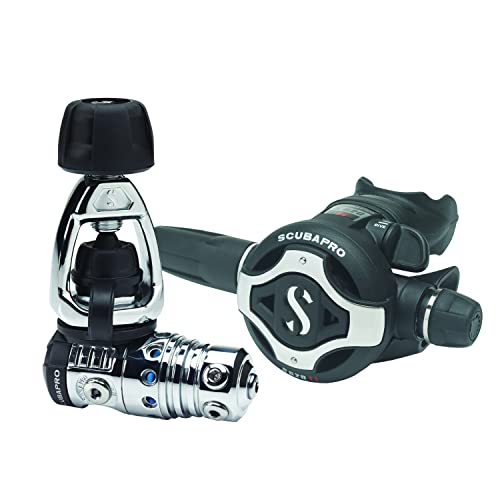
Scubapro MK25 EVO/S620 Ti Regulator System
A balanced piston first stage with very high flow, and a titanium second. Superb breathing performance, and comfortably more regulator than any recreational profile needs.
Best for: High gas demand diving, and divers who want the best breathe available
Skip it if: Any recreational profile, where the extra flow capacity is simply never demanded
Apeks XTX200 Regulator
The over-balanced diaphragm set that a large share of UK and cold water technical divers run. Apeks sells almost entirely through dive centres, so expect to buy this from a shop rather than a marketplace.
Best for: Cold water technical diving
Skip it if: Anyone without a local Apeks dealer, because this is a dive shop purchase by design
Specifications are the manufacturer's published figures, compared against verified owner reviews. Prices and stock change constantly, so confirm on the retailer page. Cards without a single listing link to a scoped search because that model is sold through dive shops. As an Amazon Associate we earn from qualifying purchases.
What does a regulator actually have to do?
It has to deliver gas at ambient pressure, on demand, at whatever rate you ask for. That last part is where the engineering lives, because your demand is not constant. A relaxed diver at 30 feet moves maybe 15 litres a minute. The same diver at 100 feet, swimming into current, slightly alarmed, is at 4 ata ambient pressure and breathing four times the surface volume, which is a very different flow requirement out of the same hardware.
This is why depth matters to regulator choice in a way it does not to almost anything else you buy. Air consumption scales directly with ambient pressure: at 33 feet you breathe twice your surface rate, at 66 feet three times, at 99 feet four times. A regulator that breathes pleasantly on a shallow reef can feel restrictive at the bottom of a wall on the same day.
It also has to keep doing this while cold. Gas expanding rapidly through a first stage gets very cold, and in water below about 50 F that can freeze moisture in and around the mechanism into a free flow. That single failure mode is the reason sealed first stages exist and the reason manufacturers publish cold water ratings.
Piston or diaphragm: which first stage should you buy?
A piston first stage uses a moving piston to open and close the valve, and a diaphragm first stage uses a flexible membrane to do the same job. Both are proven, both are everywhere, and the difference is not one of quality.
A piston has fewer moving parts and typically flows more gas for a given size, which is why the highest performing regulators in the category, including the Scubapro MK25 EVO with an S620 Ti second stage at under $1,500, are piston designs. The classic piston drawback is that the mechanism is open to water, so silt and salt reach the internals. The Oceanic Alpha 8 SP5 at under $500 and the Mares Rover 15X at under $500 are both piston sets, and both are entirely appropriate for warm clear water.
A diaphragm puts a membrane between the water and the mechanism, which means the whole first stage can be sealed. That is why every serious cold water regulator is a sealed diaphragm: the Cressi MC9-SC at under $1,000, the Scubapro MK17 EVO 2 at under $1,000 and the Apeks XTX200 all work this way. Sealing also keeps silt out, which matters in quarries and in anything close to a bottom.
If your diving is warm, clear and shallow, buy on price and dealer network and ignore this section. If it is cold, silty, or likely to become either, buy a sealed diaphragm and stop reading comparison threads.
What does balanced actually buy you?
A balanced first stage delivers a constant intermediate pressure regardless of cylinder pressure. An unbalanced one does not: as the cylinder empties from 3,000 psi toward 500, the intermediate pressure drifts and the regulator gets progressively harder to breathe.
The effect is small on a shallow warm dive and unmistakable at the end of a deep one. The last ten minutes of a dive at 80 feet, on a nearly empty cylinder, is the exact moment an unbalanced regulator feels its worst, and it is also the moment you have the least spare attention. This is the single most useful upgrade in the category, and it is what separates the Aqua Lung Titan at under $500 and the Cressi MC9-SC from the entry sets below them.
Second stages are balanced separately, sometimes described as pneumatically balanced or air balanced. That keeps inhalation effort steady across the same pressure range and lets the manufacturer fit a lighter, more sensitive valve. A balanced second stage on an unbalanced first stage is a common and reasonable compromise at the lower end.
| Regulator | Price | First stage | Balanced | Sealed | Service interval |
|---|---|---|---|---|---|
| Oceanic Alpha 8 SP5 | Under $500 | Piston | Unbalanced first | No | 1 yr |
| Cressi AC2/XS2 set | Under $500 | Piston | Unbalanced | No | 1 yr |
| Mares Rover 15X | Under $500 | Piston | Unbalanced | No | 1 yr |
| Sherwood Brut Pro | Under $500 | Piston, dry bleed | Unbalanced | Dry bleed | 1 yr |
| Aqua Lung Titan | Under $500 | Piston | Balanced first | No | 1 yr |
| Cressi MC9-SC/Compact Pro | Under $1,000 | Diaphragm | Balanced | Yes | 1 yr |
| Atomic Aquatics Z3 | Under $1,000 | Diaphragm | Balanced | Yes | 3 yr |
| Scubapro MK17 EVO 2 / C370 | Under $1,000 | Diaphragm | Balanced | Yes, cold rated | 1 yr |
| Scubapro MK25 EVO / S620 Ti | Under $1,500 | Piston | Balanced | XTIS insulated | 1 yr |
First stage type, balancing and quoted service intervals are the manufacturers' published figures. Service interval terms vary by market and by warranty registration, so confirm with your dealer.
How much does a regulator really cost to own?
The purchase price is roughly half the story over a decade. A dive shop service on a standard two stage set with an octopus and a gauge typically runs around $110 a year including parts, and many warranties are void without documented annual service.
Work it through. The Cressi MC9-SC at under $1,000 serviced every year for ten years is under $2,000 all in. The Atomic Aquatics Z3 at under $1,000 with its quoted three year interval, serviced four times in the same decade, comes to under $1,200. That is the actual argument for the Atomic, and it only works if you are diving enough that the shop clock rather than the calendar governs.
The step from an entry set to the MC9-SC is up to $250 more, and it buys sealing and balancing, which are the two things you feel. The step from there to the MK25 EVO with S620 Ti is up to $750 more, and it buys flow capacity that recreational profiles do not demand. That is the shape of the whole category: a steep improvement up to the sealed mid tier, then a long expensive plateau.
Why are so many good regulators not sold online?
Because the manufacturer decided the sale should include a person. Regulators need annual service, they need a shop that stocks the right service kit, and warranty terms very often require both purchase from an authorised dealer and documented service history. Apeks is the clearest case: the XTX200 is one of the most widely used cold water technical regulators in Europe and it sells almost entirely through dive centres.
That is not a gap in the market, it is the market working as designed. If you buy a regulator from a marketplace seller, check that the seller is an authorised dealer for that brand, keep the invoice, and register the warranty the day it arrives. If you cannot confirm any of that, buy locally and treat the difference as the price of a service relationship you will use every year for a decade.
What else has to be on the hoses?
A recreational regulator set is four items on one first stage. The primary second stage. An alternate air source, normally a yellow octopus on a longer hose, and the Apeks XTX50 Octopus at under $500 is what the category looks like when someone takes it seriously. A submersible pressure gauge, because the computer does not know your cylinder pressure unless you paid for a transmitter. And a low pressure inflator hose to the BCD, plus a second one to a drysuit if you dive one.
A mechanical Cressi mini SPG console at under $250 has no battery and no firmware, which is why air integrated divers still carry one. Analogue gauges fail slowly and visibly; that is the feature.
Carry a save-a-dive kit at under $250 with the set. The single most common trip ending failure in this category is a blown o-ring at the cylinder valve, which is a fifty cent part and a two minute fix if you have one and a cancelled day if you do not.
How does your regulator interact with gas planning?
It sets the floor, not the plan. A regulator that breathes well does not give you more gas; it just stops you working harder for what you have. The plan is arithmetic you do before you get in.
Measure your own consumption. Surface air consumption in psi per minute is your pressure used divided by dive time, divided by average ambient pressure in ata. A diver who uses 2,000 psi in 40 minutes at an average depth of 50 feet is at 50 psi per minute over 2.52 ata, which is 19.9 psi per minute. Converted for an aluminium 80 at 77.4 cubic feet and 3,000 psi, that is a respiratory minute volume of about 0.51 cubic feet per minute, comfortably inside the typical adult range of 0.4 to 0.75. Crucially, the psi figure belongs to that cylinder only, while the volume figure travels. The SAC rate calculator does the conversion.
Then price the reserve. Rock bottom is the gas two divers need to share their way to the surface from depth, with a minute to solve the problem, an ascent at 30 feet per minute and 3 minutes at 15 feet, all at an elevated breathing rate. At 100 feet in an aluminium 80 that is roughly 33 cubic feet, about 1,300 psi. Work your own numbers in the gas planning calculator, and treat the output as arithmetic a trained diver checks rather than as a dive plan. If you dive nitrox, pair it with the nitrox MOD calculator, because a regulator has no opinion about oxygen partial pressure and neither does a pressure gauge.
Who should not buy the expert tier?
Skip the Scubapro MK25 EVO with the S620 Ti at under $1,500 unless you have a specific high demand reason: deep dives on air, heavy working dives, or a genuine dislike of any perceptible breathing resistance. Its advantage is peak flow, and a recreational diver on a reef at 60 feet never asks for peak flow. Paying up to $750 more than the MC9-SC for headroom you will not use is the most common overspend on this page.
Skip the MK17 EVO 2 at under $1,000 if all your diving is warm. Its cold water rating is the whole reason it costs what it does. In the Caribbean it is a very good regulator wearing a coat it does not need.
Skip the Atomic Z3 if you dive fewer than about fifteen times a year. The three year service interval is the argument, and the saving only accrues to divers who would otherwise be paying a shop every year for a set they used heavily. An occasional diver captures none of it.
Skip the Apeks XTX200 if there is no Apeks dealer within a sensible drive. That is not a slight on the regulator, which is superb. It is a statement about a product whose ownership model assumes a shop.
A newly certified diver doing warm water holidays should buy an entry set, or the MC9-SC if the budget stretches, and put the difference into a computer and a mask that seals. The beginner scuba setup prices that whole decision, and the BCD roundup covers the other half of the life support system.
Buying tips
- Check yoke versus DIN before you order. Yoke clamps over the valve and dominates North America and the Caribbean; DIN threads in, holds higher pressure and dominates Europe and technical diving. Adapters exist in both directions.
- Count the low pressure ports. You need one for the primary, one for the octopus, one for the BCD inflator and one more if you dive a drysuit.
- Confirm the seller is an authorised dealer. Grey market regulators are frequently excluded from warranty and sometimes from service.
- Get it serviced on time, even if it sat unused. Service intervals are time based, because o-rings and lubricants age on a shelf.
- Rinse with the dust cap on and dry. Water pushed into a first stage through an open inlet is the most common self inflicted regulator failure there is.
- Breathe the octopus yourself on every dive. An alternate air source you never test is a decoration.
Deciding on a specific model? We review the Cressi MC9-SC and Compact Pro regulator set review and Zeagle Octo Z II combination regulator and inflator review in full.
Frequently asked questions
What is the best scuba regulator for most divers?
The Cressi MC9-SC with the Compact Pro second stage at under $1,000 is the best regulator for most divers. The sealed balanced diaphragm first stage keeps breathing effort constant as cylinder pressure falls and keeps silt and cold water out of the internals, and the set ships with a matching octopus. Below that, the Oceanic Alpha 8 SP5 at under $500 is an honest warm water starter with excellent North American parts availability.
What is the difference between a piston and a diaphragm first stage?
Both reduce cylinder pressure to an intermediate pressure of roughly 130 to 145 psi. A piston first stage uses fewer moving parts and generally flows more gas, which is why high performance units like the Scubapro MK25 are piston designs. A diaphragm first stage separates the internals from the water with a membrane, so it can be fully sealed against cold and silt. Sealed diaphragms are the usual choice for cold water and drysuit diving.
What does balanced mean on a regulator?
A balanced first stage delivers the same intermediate pressure whether your cylinder holds 3,000 psi or 500. An unbalanced one gets slightly harder to breathe as the cylinder empties, which is most noticeable at depth and at the end of a dive, exactly when you least want it. A balanced second stage keeps inhalation effort steady across that same range. Balanced is the single most worthwhile upgrade in the category.
How often does a regulator need servicing?
Most manufacturers specify an annual service, and many warranties require it with documented proof. Atomic Aquatics is the notable exception and quotes a three year interval on the Z3 because of its seat saving orifice design. Expect roughly $100 to $130 per year at a dive shop plus parts. Service intervals are also time based, not just dive based, so a regulator that sat in a closet still needs the same work.
Should I buy a regulator or keep renting one?
Buy once you are diving more than about fifteen times a year or diving cold water. A rented regulator is an unknown service history breathing into your lungs, and rental sets are tuned for durability rather than comfort. That said, a regulator is the item most worth buying from a local dive shop rather than online, because the service relationship, the fit check and the warranty documentation all come with the sale.
Do I need an octopus, and does it have to match?
You need an alternate air source, and an octopus is the standard recreational answer: a second stage on a longer yellow hose that your buddy can breathe. It does not have to match your primary, but a matched set from one manufacturer simplifies service. What matters is that it breathes well enough that you would happily use it yourself, since in a real out of gas situation you may end up on it.
What is the best regulator for technical diving?
Technical divers favour a DIN first stage with a sealed balanced design and a second stage that breathes easily at depth in cold water. The Apeks XTX200 is one of the most widely used cold water technical regulators, and the Scubapro MK17 EVO 2 at under $1,000 is the cold water pick in this roundup. Recreational divers do not need to spend at that level.
What is the best travel scuba regulator?
Pick the lightest balanced regulator that suits your water temperature and check yoke versus DIN for where you will be diving. For warm water travel the Oceanic Alpha 8 SP5 at under $500 is the starter pick in this roundup, and a yoke-to-DIN adapter covers either valve at your destination.
How we choose: we compare published manufacturer specifications, published training agency standards, and verified owner reviews across retailers. We do not test gear in person, and every depth rating, cylinder capacity and algorithm name quoted here is the manufacturer's published figure unless we say otherwise, so confirm it on the current spec sheet before you buy. Nothing here is dive instruction, and no calculator output on this site is a dive plan. Scuba diving carries a real risk of decompression sickness, oxygen toxicity, barotrauma and drowning. Dive within the limits of your certification, verify every plan with your own computer, and buy the training before the gear that assumes it.
